
How Exercise Improves Memory, Reaction Time, Gait, and Balance After 60

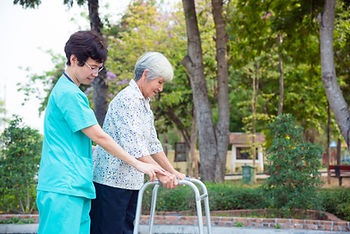
Let me say something that surprises most of my readers: if you want a sharper brain, the most powerful thing you can do is move your body.
Not crosswords. Not brain games on your phone. Movement.
I think about it like a bank account. You have an account for strength, an account for balance, and an account for memory. Starting around age 30, life starts pulling money out of all three, a little every year, and it never asks permission. Most people don't notice the balance dropping until one day the account is overdrawn, and they are on the floor wondering what happened. Exercise is the deposit. And the beautiful thing about deposits is that they compound. A little bit, done often, turns into a lot over a year.
Because I respect you too much to hand you hype, I am going to show you the actual studies. Including where the evidence is strong, where it is modest, and where it is honest to say we don't know yet.
Memory: walking literally grew the brain's memory center
Here is my favorite study in this whole post. Erickson and colleagues published it in the Proceedings of the National Academy of Sciences in 2011. They took 120 sedentary adults aged 60 to 80 and split them into two groups for a full year. One group walked briskly for about 40 minutes, three times a week. The other group did stretching and toning for the same amount of time.
At the end of the year, MRI scans showed something remarkable. The walkers' hippocampus, the seahorse-shaped brain region that handles learning and memory and is one of the first areas affected in Alzheimer's, had grown by about 2 percent. The left side grew 2.12 percent, and the right side grew 1.97 percent. The stretching group's hippocampi had shrunk by about 1.4 percent, which is the normal rate of loss as we age.
In plain terms: one year of walking reversed roughly one to two years of brain aging in the memory center. And the walkers' gains tracked with higher levels of BDNF, a protein that supports neuron growth and learning, and with better spatial memory scores.
That is compound interest. Nobody got rich off a single deposit. They got there by showing up three times a week for a year, and the account grew.
One honest complication, because it matters: the stretching group also improved on the memory test. So the brain growth finding is solid, and the memory finding is real, but the chain between them is less tidy than the headline suggests. Walking is not a magic memory pill. It is, however, the only intervention in this post with a brain scan to back it up.
Reaction time: your speed is trainable at any age
Reaction time is the gap between seeing something and responding to it. The curb you notice. The stumble you catch. The hand you put out. It slows with age. It also responds to training, and the studies are surprisingly consistent about it.
Think of reaction time like car insurance. You pay the premium every month hoping you never need it. Then one day somebody pulls out in front of you, and you are very glad you paid. Reaction drills are the premium. The fall you catch is the payout.
Watch my kids, and you will see reaction training in its natural form. My son Bennett is three and a half. He climbs everything, he builds with dadda, he drills holes in scrap wood with my power drill and then hammers nails into them, and he jumps on his trampoline and plays in his sand castle.
Every one of those is hand-eye coordination, timing, and balance, and he does it a hundred times a day because it is fun. His little sister Cecily is 15 months old, and she copies everything he does. She climbs like a pro already; she walks, almost runs, she bounces on the trampoline right next to him, and she is feisty and sassy and starting to learn to talk. She learns by watching and then doing. That is how reaction and balance work at any age. You practice responding, and the body gets faster at responding.
The studies back that up. In a 2019 trial (Karssemeijer and colleagues), 115 people with dementia cycled for 12 weeks, some on a regular bike and some on a bike with a screen game. Thinking speed improved in both cycling groups. The game added nothing over the cycling itself. That is a useful lesson: the movement was doing the work.
In a smaller 2021 trial (Swinnen and colleagues), 45 people with mild to moderate dementia stepped on a pressure-sensing platform in response to cues on a screen, 15 minutes, three times a week, for eight weeks. Step reaction time improved substantially, along with gait speed and overall cognition scores.
And in a 2025 nursing home trial (Çekok and Anaforoğlu), an eight-week balance-based visual reaction program produced a large improvement in reaction time compared to balance exercise alone, though overall cognition scores did not differ between groups.
The pattern across all three: reaction speed improves when you practice reacting. Catch games, tap games, stepping to cues. The drills I use with clients, including the light tap games and the foam dumbbell catch, are exactly this kind of training. It won't make you 25 again. It will make you faster than you were last month.
Gait and balance: this is where the evidence is strongest
If memory is the most exciting finding, falls are the most important one. Because falls are what take independence away.
Think of balance like the foundation of a house. Nobody brags about a foundation. Nobody takes pictures of it. But everything in the house depends on it, and when it cracks, everything above it is in trouble. Balance training is foundation work. It is not glamorous. It is what keeps the house standing.
The biggest synthesis ever done on this question is Sherrington and colleagues, a Cochrane review of 108 randomized trials involving 23,407 older adults living in the community. The headline: exercise reduced the rate of falls by 23 percent overall. Balance and functional exercises, the kind that challenge your balance and mimic everyday movement, reduced falls by 24 percent. Programs that combined balance work with resistance training reduced falls by 34 percent. And here is the dose finding that matters: balance-challenging exercise at three or more hours per week cut the fall rate by 42 percent.
Read that again. Nearly half. Not from a drug. From practicing balance.
One more honest note from the same literature: in a small trial comparing Wii Fit balance games to a walking program, both groups improved equally. The game wasn't better than walking. The takeaway isn't to buy a game. It's that balance improves when you practice it, in whatever form you will actually do.
Thinking skills in dementia: real, but let's be honest about the size
Because some of you are caring for a spouse or parent with dementia, I want to be straight about this part.
A 2024 Cochrane review of exergaming, which is exercise combined with a game, in dementia found a small improvement in overall cognition compared to inactive care. But the authors rated the evidence as very low certainty, because it rested on only about 113 people, and the benefit disappeared when exergames were compared against ordinary active exercise. A 2024 research review (Chan and colleagues) found a similarly small effect in dementia, about half the size of the effect seen in people with mild cognitive impairment.
Here is how I think about it. Even late in life, the account is not closed. You can still make deposits. They are just smaller, and they matter more for mood and engagement than for independence. Movement helps thinking skills in dementia a little, and games are a good way to make movement enjoyable. But games are not a treatment, not a cure, and not a substitute for medical care. Anyone selling you a game as a dementia cure is selling you something the evidence doesn't support. What the evidence does support is simpler and cheaper: regular movement, done with other people, at a level the person can succeed at.
So what do you actually do?
Here is the weekly pattern that captures most of what these studies found:
• Walk most days. Build toward 30 to 40 minutes at a pace where you can talk but not sing. This is the Erickson dose, and it is the foundation of everything else.
• Strength twice a week. Chair stands, push-ups against a wall, carrying groceries or light weights. Strength is what gets you out of a chair and up from the floor.
• Balance every day, even five minutes. Tandem stance, one foot in front of the other, holding a counter. Slow weight shifts side to side. Step over a line on the floor. The Sherrington data says dose matters, so work toward more balance time, not less.
• Reaction play two or three times a week. Catch a soft ball with a partner. Tap a light when it flashes. Step to a called-out direction. Walk while naming animals. Anything that makes you think and move at the same time counts, and it is more fun than any of the above, which is why people actually keep doing it.
None of this requires a gym. All of it requires consistency. The people in these studies didn't get results in a week. They got them in eight to twelve weeks, and the walking study ran a full year. The brain responds to what you do repeatedly, not to what you do once.
The bottom line: how exercise improves memory
Your brain and your body are not two separate systems. They are one system, and it was built to move. Walking grows the memory center. Balance practice cuts falls by a quarter or more. Reaction drills sharpen the speed that catches a stumble before it becomes a fall. And for those facing dementia, movement is one of the few things with real evidence behind it. Modest evidence, honestly stated, but real. Exercise improves memory.
Start with walking, then add balance, and play a little. Think of every session as a deposit. Your future self, the one still living independently, still catching herself before she falls, will thank you.
Below I've created a weekly checklist to keep yourself accountable with walking, reaction time, playing and more. Download it, print it, use it. It's free!
If you want help building a program around your body, your equipment, and your life, that's what I do. Reply to this email and let's talk.
-Danny
You're reading Stewarding Health. A weekly newsletter for those stewarding their health in this life, for the next. If you're not subscribed to receive my weekly email, click the button below.
Sources: Erickson and colleagues, Proceedings of the National Academy of Sciences, 2011. Sherrington and colleagues, Cochrane Database of Systematic Reviews, 2019. Karssemeijer and colleagues, Alzheimer's Research and Therapy, 2019. Swinnen and colleagues, Alzheimer's Research and Therapy, 2021. Çekok and Anaforoğlu, Scientific Reports, 2025. Voinescu and colleagues, Cochrane Database of Systematic Reviews, 2024. Chan and colleagues, npj Digital Medicine, 2024.
This post is educational, not medical advice. Talk to your doctor before starting a new exercise program, especially if you have a heart condition, a history of falls, or a neurological diagnosis.


Comments